Dengue Prevention and Vector Control Operations Intensified in Islamabad
Date: Sep 29, 2026
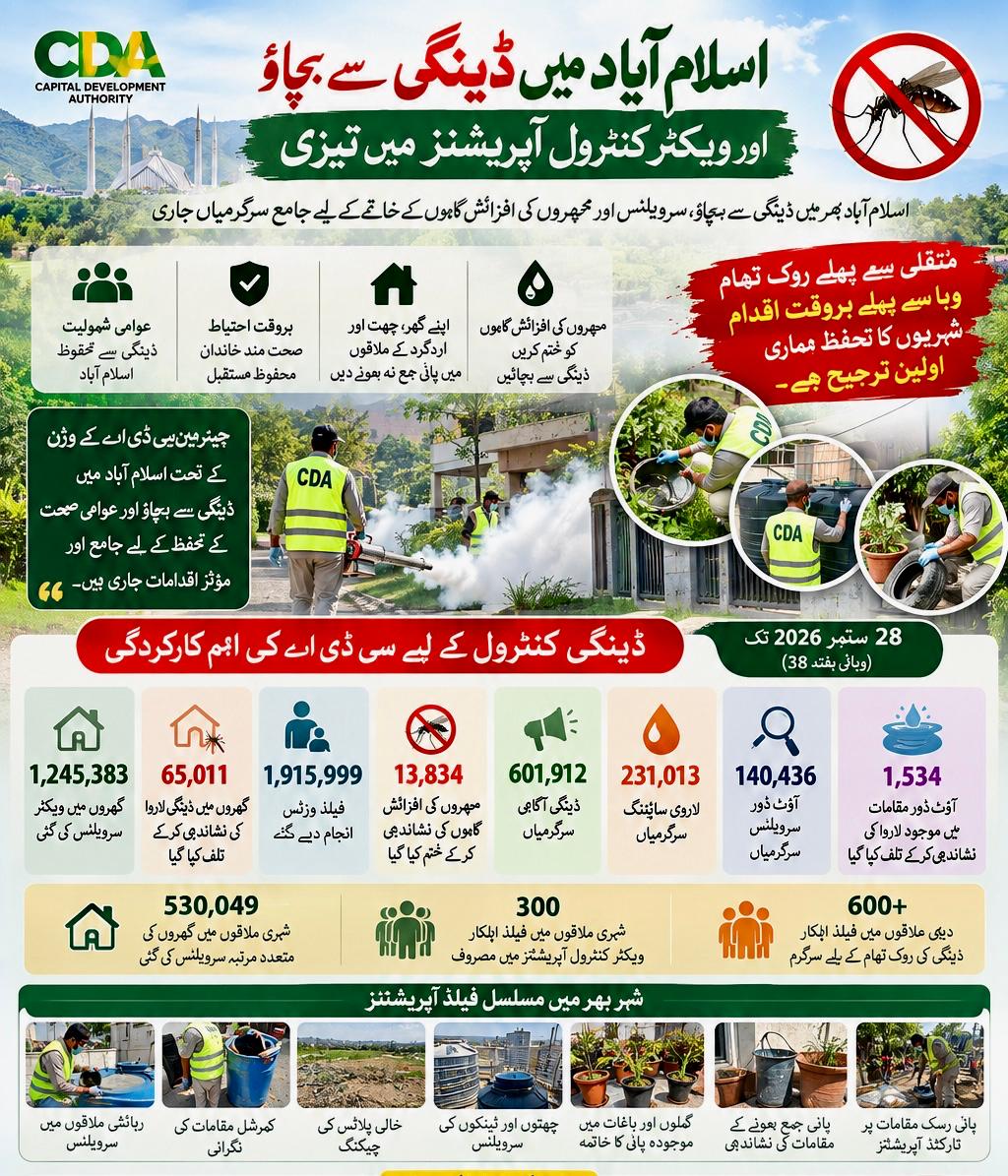
Islamabad, September 28, 2026: Under the vision of the Chairman, Capital Development Authority (CDA), CDA has making his comprehensive and effective activities for dengue prevention and vector control are continuously being carried out across the federal capital in collaboration with CDA and the Islamabad Health Department. The objective of these measures is to ensure timely identification and elimination of dengue mosquito breeding sites, effective surveillance, and prevention of possible disease transmission at an early stage. Vector control operations are being conducted under the supervision of Director General Health, CDA-MCI. Special focus is being placed on effective surveillance, timely detection, mechanical source reduction, larval control, and targeted activities in high-risk areas to minimize the risk of dengue transmission and ensure the protection of citizens. By the grace of Allah Almighty, the dengue situation in Islamabad remains under control up to September 28, 2026, Epidemiological Week 38۔ Extensive surveillance and vector control activities are being carried out by field teams across the city as part of ongoing dengue prevention efforts. As of September 28, 2026, vector surveillance has been conducted in a total of 1,245,383 houses, while the presence of dengue larvae was detected in 65,011 houses, where the larvae were eliminated through mechanical source reduction. During these operations, a total of 1,915,999 field visits were conducted, while 13,834 mosquito breeding sites were identified and eliminated. In addition, 601,912 dengue awareness activities, 231,013 larviciding activities, and 140,436 outdoor surveillance activities have been carried out. Furthermore, 1,534 larva-positive outdoor sites were identified and subsequently eliminated. In the urban areas of Islamabad, approximately 530,049 houses have undergone multiple rounds of surveillance. Follow-up surveillance is also being conducted at intervals of 15 days to ensure continuous monitoring and timely elimination of mosquito breeding sites. Around 300 field personnel are actively engaged in vector control operations in urban areas, while more than 600 personnel are performing dengue prevention duties in rural areas. Sanitary patrols and field teams are continuously monitoring residential areas, commercial locations, vacant plots, rooftops, gardens, flowerpots, water accumulation points, and dengue hotspots. Identified mosquito breeding sites are being eliminated through mechanical source reduction and appropriate larval control measures to prevent mosquito breeding before it can contribute to disease transmission. CDA and the Islamabad Health Department have appealed to citizens to extend full cooperation to field teams in dengue prevention efforts and ensure that water does not accumulate in their homes, rooftops, gardens, flowerpots, containers, or surrounding areas. Any stagnant water should be removed immediately to prevent mosquitoes from breeding. Public participation, timely preventive measures, and collective responsibility are essential for effective and sustainable dengue prevention, particularly during the high-risk dengue season. CDA and MCI will continue it's comprehensive surveillance, preventive measures, awareness campaigns, and targeted vector control operations to ensure the timely identification and elimination of mosquito breeding sites and provide maximum protection to citizens. *Citizens have appreciated the active and sustained efforts of CDA and the Islamabad Health Department for dengue prevention and vector control, describing the ongoing field surveillance, identification and elimination of mosquito breeding sites, and preventive measures for the protection of public health as highly commendable.*
Related Images




Related Links
- Chairman CDA Visits Islamabad Expressway East Project, Reviews latest Progress and Directs Timely Completion of the project, ensuring quality and standards
- Norway's Ambassador Sigvald Hauge Calls on Chairman CDA at CDA Headquarters; Matters of Mutual Interest Discussed
- Chairman CDA Islamabad Hold Key Meeting with Investors and Developers to Upgrade Hospitality Sector ahead of SCO Summit 2027
- CDA Retrieves 1,133 Kanals of Land Worth Billions of Rupees in Sector E-12 After 40 Years; Development Work Progressing at Full Pace
- CDA Intensifies Citywide Cleanliness Drive to Make Islamabad more Cleaner, Greener, Pollution-Free and Safer Capital
- CDA and IFC Explore Cooperation to Modernise Islamabad's Water Supply System